

How To Travel Kerala Like A Local Without A Guide
Kerala has a way of making you feel like you belong, even if you have just arrived. Travelling here is all about the ‘un-plan.’ It is about trusting the locals, letting your itinerary evolve on the fly, and finding joy in the simple moments.
Use public transport like buses, ferries and trains, eat where locals eat, be comfortable asking for help and experience the real Kerala. Dress modestly, respect local customs and plan your days around early mornings and slower evenings.
Read ahead to know more about the small choices that will help you navigate the state more comfortably!
Seeing Kerala Beyond Tours And Travel Guides
How To Move Around?
Hop on to KSRTC (Kerala State Road Transport Corporation) buses to truly wander like a local. They might not have air conditioning and the seats might be a bit firm, but they offer a wonderful ride.
Government buses cover nearly every village, while private ones fill the gaps with speed and flair. Do not be intimidated by the lack of English signs on every bus. Just say your destination to the conductor and they will guide you.
The railway network is another gem for the independent traveller. Taking a local passenger train is an experience in itself. Booking in advance is wise, but unreserved compartments are common for short rides.
And, if you are in Kochi, use the Water Metro or the public ferries. They are the most scenic commutes in the world for just a handful of rupees.
For shorter distances within towns, the auto-rickshaws are your best friend. In the state, the drivers are remarkably honest and will almost always use the meter.
Renting a scooter or small car works well too, especially in hill areas and backwater regions. Roads are narrow but beautiful, and honking is more communication than aggression.
How To Communicate?
Malayalam is the main language here. Communication is rarely a hurdle because Kerala has the highest literacy rate in India, and English is widely understood. Hindi works in patches, less so in rural interiors.
However, learning a few words in Malayalam goes a remarkably long way. A simple ‘Chetta’ for brother, ‘Chechi’ for sister or ‘Nanni’ for thank you will break the ice instantly and earn you a genuine smile. Locals appreciate attempts, even the imperfect ones.
Be prepared for personal questions. They will ask you about your job, and your family, not because they are nosy, but because in Kerala, everyone is treated like an extended relative.
Engage in these conversations. Honestly, they might be the gateway to the most memorable experiences of your entire trip.
Where To Stay?
Accommodation in Kerala ranges from the humble to the heavenly. If you want the true local experience, homestays are the way to go. This is where you sit at the family dining table, learn how to make appams from the matriarch, and get tips on the best local swimming holes.
But, if you are looking for a bit more comfort without losing that authentic touch, there are some wonderful home-grown brands you can seek.
For instance, Gokulam Hotels & Resorts has properties scattered across the state, from the bustling streets of Kochi to the temple town of Guruvayur.
They offer a solid, reliable stay that feels rooted in the local culture. Of course, you can also find quirky boutique hotels in Fort Kochi or heritage bungalows in the middle of rubber estates.
Where & What To Eat?
Food is the most intimate part of Kerala culture. It is one of the factors that has visitors returning to the place over and over again. Locals eat early breakfasts, heavy lunches and lighter dinners.
Rice dominates, but preparation styles change every few kilometres. For breakfast, Appam, Puttu, Kadala (chickpea) Curry and Vegetable Stew are some of the staples.
Look for the eateries that are crowded with people at lunchtime, that is usually the best indicator of quality. A traditional ‘Sadhya’ or meal served on a banana leaf is a must-try. It is a balanced feast of rice, various vegetarian curries, side dishes, pickles and papadums.
Eating this with your right hand is non-negotiable, should you want the full experience. It is a great sensory journey that no fork and knife can replicate.
Oh, do not forget to order Malabar Biriyani! You could not stop singing praises about it. You must also give Kappa (boiled tapioca) and Meen (Fish) Curry a try! It is the taste of the backwaters.
Stand by a roadside stall as the evening shadows lengthen and order a Kattan Chaya (black tea) and Pazhampori (banana fritters) to round off your day. That is a moment of pure bliss before the stars take over the sky.
When To Visit?
Come between September and March to witness the beautiful emerald version of Kerala. As the monsoon retreats, it leaves behind a vibrantly green landscape.
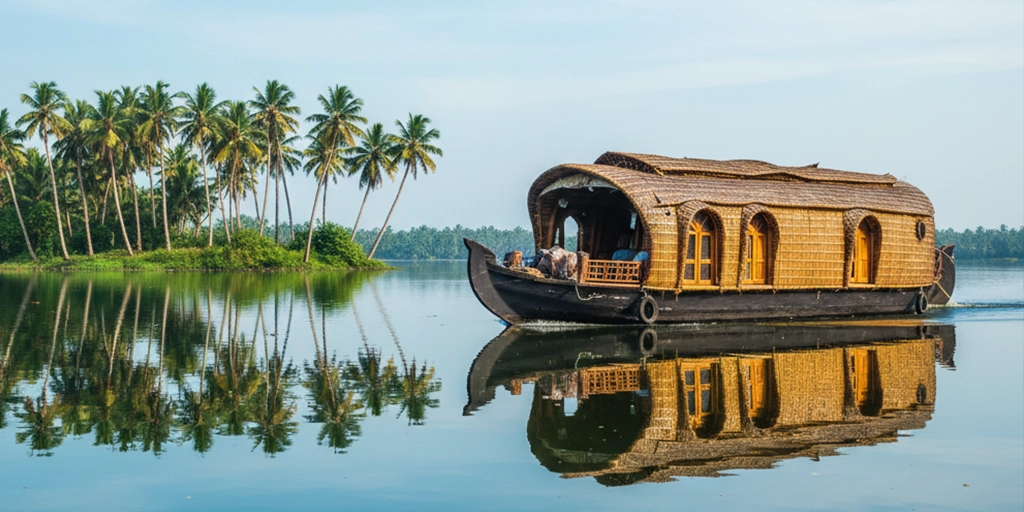
It is the perfect time for drifting through the Alleppey backwaters on a houseboat or trekking the mist-kissed tea estates of Munnar. Most tourists flee when the clouds turn grey, but that is when Kerala wakes up.
The ‘Karkidakam’ season (July/August) is the best time to be here if you want to live through the healing side of the land.
This period is wonderful for traditional Ayurveda detoxification and immunity-boosting treatments due to the cool, moist weather which allows the body to absorb therapies better.
Practical Tips For Travel
First, let’s talk about wardrobe strategy. The climate is a mix of high humidity and sudden downpours. You can pack light, breathable cotton clothes.
If your itinerary includes Munnar or Wayanad, have a light sweater or fleece as temperatures drop significantly at night. Locals carry a sturdy umbrella year-round, it is as much for the blazing sun as it is for the monsoon rains.
Regarding connectivity, you will find 4G and 5G coverage in all 14 districts, even in relatively remote villages.
Using digital payment apps like UPI is common even at small tea stalls, though it is always wise to carry some cash as there might be 'digital blackouts' in deep plantation areas or while cruising remote stretches of the backwaters.
On the cultural front, temple etiquette is important. Many traditional Hindu temples in Kerala have a strict ‘No Shirts’ policy for men and require a ‘Mundu’ (dhoti) to be worn over trousers. Women should opt for long skirts, sarees or salwar kameez.
Also, remember to leave your footwear in the designated place outside homes and sacred spaces, it is a small gesture that speaks volumes of respect.
Sundays in Kerala are traditionally quiet, with many small shops and family-run establishments closing their doors to observe a day of rest. However, the real wildcard is the 'Hartal' (strike).
These localised or state-wide strikes can bring public transport to a standstill, and result in shuttered storefronts for the day. During those days, you can use it as an excuse to stay in, read a book, and enjoy a slow meal.
Safety is generally high, but like anywhere else, it pays to be sensible. Keep your itinerary flexible and trust your gut. If you ever feel lost or confused, do not hesitate to approach a local shopkeeper or a police officer.
There is a strong sense of community here and people take pride in ensuring that guests have the most wonderful experience.
So, we wish you the very best as you travel through the roads and the rivers. May you find that ‘God’s Own Country’ is even better when you are a part of Keralite life!